
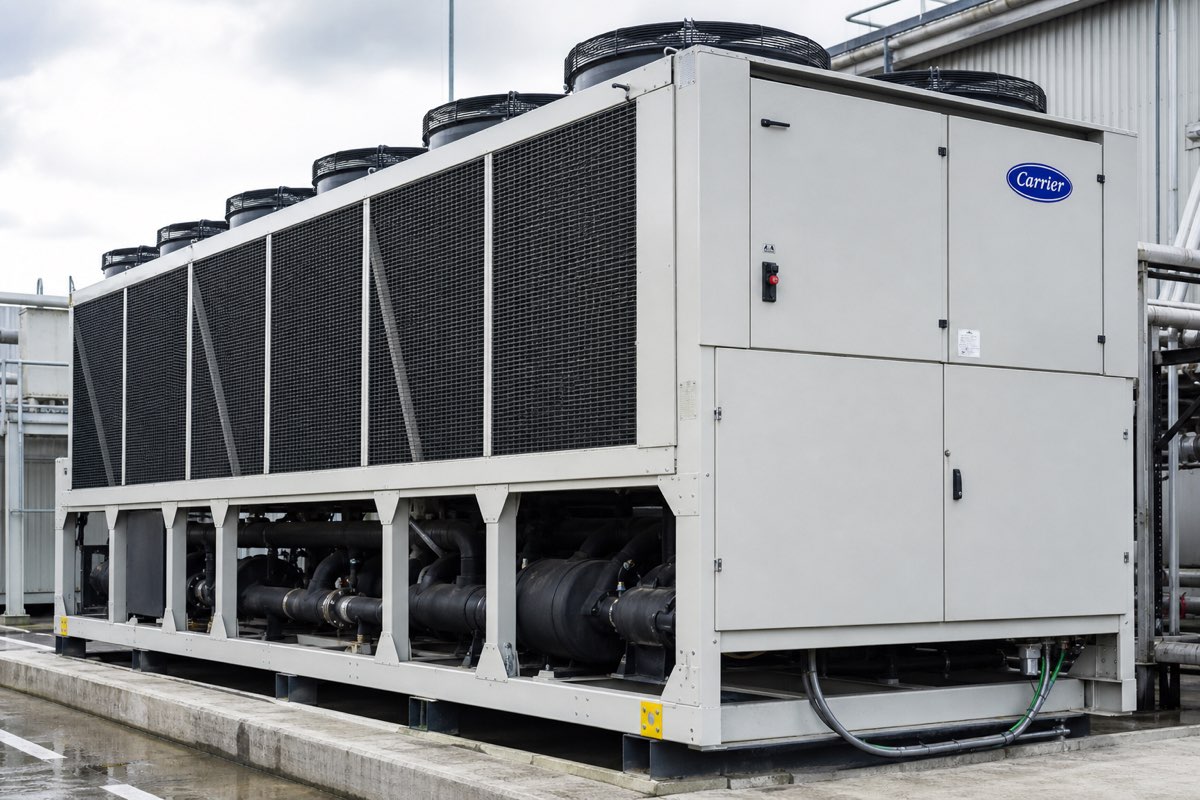
Temporary chiller rental
When a plant chiller fails or a planned shutdown pulls cooling capacity offline, your process and your building still need heat removed. We build your facility profile, then run the search for you, free of charge. We don't own a single chiller, so the match is about your process, not our inventory. We route temporary chiller rental requests to vetted providers carrying air-cooled and water-cooled units from roughly 10 to 1,000-plus tons, for process cooling and comfort cooling, including low-temperature glycol applications, across hospitals, data centers, manufacturing, food and beverage, pharma, and plastics.
By Industrial Rental Co Editorial Team Reviewed July 2026
- Air-cooled and water-cooled units for indoor and outdoor installs
- Roughly 10 to 1,000-plus tons, single units or paired in banks
- Process cooling and comfort cooling, including low-temperature glycol
- Capacity matched by qualified, insurance-verified third-party providers
Air-cooled versus water-cooled, and how rental sizing works
Chiller rentals split into two families. Air-cooled units reject heat to the ambient air through onboard condenser fans, so they drop on a pad outside and need only power and chilled-water piping. Water-cooled units reject heat to a condenser loop, so they run more efficiently in heat but require a cooling tower, condenser pumps, and the extra piping that loop demands. The right family depends on your space, your ambient conditions, and whether a tower is already on site.
Sizing is quoted in tons of cooling at a given leaving-water temperature, not nameplate alone. A unit rated for 500 tons at 44 degrees Fahrenheit leaving water delivers far less when you push it down to 20 degrees for a glycol process loop. Telling providers your tonnage, your target leaving-water temperature, and your fluid up front is the single biggest driver of an accurate match.
- Air-cooled: outdoor pad, power and chilled-water piping, no tower
- Water-cooled: higher efficiency, needs a cooling tower and condenser loop
- Tonnage stated at your leaving-water temperature, not nameplate alone
- Low-temperature and glycol loops sized separately for the derate
Planned shutdowns and unplanned chiller failures
Planned work is the cleanest case. A scheduled compressor overhaul, a tube cleaning, a refrigerant conversion, or central-plant construction takes a permanent chiller offline for days or weeks, and a rental holds the cooling load so production and occupants are never affected. Booking that capacity weeks ahead almost always means better selection and pricing than a last-minute scramble.
Unplanned failures are the other half. A seized compressor, a refrigerant leak, a flooded mechanical room, or a summer load that simply outruns installed capacity turns into spoiled product, halted lines, or an unsafe building by the hour. A rental is the bridge until the permanent unit is restored. Because availability and freight vary by region, requests route to multiple qualified providers rather than a single yard.
- Planned: overhauls, tube cleaning, refrigerant conversions, plant retrofits
- Unplanned: compressor failure, refrigerant leaks, flooded plant rooms
- Seasonal peaks that exceed installed cooling capacity
- Supplemental cooling for commissioning, testing, or a temporary load
What a rental chiller install actually needs
A rental chiller is rarely a standalone drop. Most installs need electrical power and distribution sized to the unit, chilled-water piping or hoses tied into your loop, and pumps to move the fluid at the required flow. Water-cooled units add a cooling tower or condenser-water source and the second loop that pairs with it. Low-temperature work adds glycol, which changes flow, pressure drop, and the delivered tonnage providers have to design around.
Sharing your utility and site constraints early matters. A unit that makes its rated tons on paper still needs the amperage at the panel, the flow at the header, and the space and access to set it. Providers who work your region regularly handle rigging, electrical tie-ins, hose runs, and the tower pairing as part of the install rather than as surprises after the equipment arrives.
- Electrical power and distribution sized to the unit's full load
- Chilled-water piping or hoses, plus pumps for the required flow
- A cooling tower or condenser-water source for water-cooled units
- Glycol and a derate plan for low-temperature process loops
Sectors served and why a marketplace beats calling yards one at a time
Temporary cooling spans nearly every sector that cannot let a space or a process get warm. Hospitals protect operating rooms, imaging suites, and patient areas. Data centers hold rack temperatures inside spec. Manufacturing, food and beverage, pharma, and plastics cool process loops where a few degrees of drift means scrapped batches, failed validations, or off-spec product. Each carries its own temperature, redundancy, and documentation needs that shape the right unit.
Calling rental yards one at a time means repeating your specs over and over and still seeing only what each yard happens to stock. We take your tonnage, leaving-water temperature, fluid, and site details once and route the request to multiple vetted providers, so you compare real options on availability and fit instead of chasing voicemails. The providers carry the equipment, the certifications, and the insurance; we connect you to the ones positioned to serve you.
- Hospitals: operating rooms, imaging, and patient-area cooling
- Data centers: holding rack and room temperatures inside spec
- Food, beverage, pharma, and plastics: validated process loops
- One request, multiple qualified providers, real options to compare
Common questions
How is a rental chiller sized?
By tons of cooling at your required leaving-water temperature, plus the fluid in the loop. A ton equals 12,000 BTU per hour of heat removal, but a unit's rated tonnage assumes a standard leaving-water temperature, often around 44 degrees Fahrenheit. Push the setpoint lower for a glycol process loop and the delivered capacity drops, so providers need your tonnage, target temperature, and fluid to quote an accurate match.
What is the difference between an air-cooled and a water-cooled rental chiller?
An air-cooled chiller rejects heat to the ambient air with onboard fans, so it sits outside and needs only power and chilled-water piping. A water-cooled chiller rejects heat to a condenser loop, running more efficiently in hot weather but requiring a cooling tower, condenser pumps, and extra piping. Air-cooled is simpler to set; water-cooled fits sites that already have tower capacity or need the higher efficiency.
What tonnage range is available for rental chillers?
Roughly 10 tons up to 1,000-plus tons. Small portable units cover server rooms, single process lines, or supplemental zones. Mid-size trailer and skid units backstop a building or production area. The largest jobs combine multiple units in parallel banks to carry a hospital, data center, or central-plant load. Sharing your total tonnage and how the load can be split helps providers scope single units or a bank.
Can a rental chiller run a low-temperature or glycol process?
Yes, and the loop is designed for it. Process loops that need leaving-water temperatures below about 40 degrees Fahrenheit typically run a glycol mixture to prevent freezing, which lowers the delivered tonnage and changes the flow and pressure drop. Tell providers your target temperature and glycol percentage so they size the unit, pumps, and piping for the actual derated capacity rather than the nameplate rating.
What does a rental chiller need to be installed on site?
Electrical power and distribution sized to the unit, chilled-water piping or hoses tied into your loop, and pumps for the required flow. Water-cooled units add a cooling tower or condenser-water source and a second loop. Low-temperature work adds glycol. Sharing your available power, flow, fluid, and access early lets providers plan rigging and tie-ins instead of discovering constraints after the equipment arrives.
How fast can a rental chiller be on site?
It depends on tonnage, air-cooled versus water-cooled, freight distance, and provider availability. Smaller portable units near a stocked yard move quickly, while large water-cooled packages, tower pairing, rigging, and permits take longer. Response times vary by location and provider availability, which is exactly why requests route to multiple qualified providers rather than being promised against a fixed window by any single yard.
Get matched with chiller rental providers
Your specs go on file with us, and we run the search for you, free of charge. Because we don't own the equipment, the match is about your needs, not our inventory. Response times vary by location and provider availability.