
Temporary industrial boiler rental
When a boiler goes offline or a planned outage pulls one from service, your heat, process steam, or hot water still has to flow. We build your facility profile, then run the search for you, free of charge. We don't own a single boiler, so the match is about your load, not our inventory. We route temporary boiler rental requests to vetted third-party providers carrying steam boilers from roughly 100 to 100,000+ pounds of steam per hour, hot water units rated in millions of BTU per hour, and complete mobile boiler rooms, for hospitals, food and beverage, pharma, refineries, and manufacturing across the country.
By Industrial Rental Co Editorial Team Reviewed July 2026
- Steam (firetube and watertube) and hot water boilers, low- and high-pressure
- Natural gas, propane, diesel or number 2 oil, and dual-fuel firing
- Trailer-mounted units, skid packages, and turnkey mobile boiler rooms
- Insurance-verified providers with ASME-coded equipment and NBIC service
Matching the right boiler type to your load
Boilers split first by what they make. Steam boilers are sized by pounds of steam per hour at your operating pressure, firetube for compact low- to medium-pressure duty and watertube for higher pressures and larger central loads. Hot water boilers are sized by heat output in BTU per hour, typically for building heat, domestic hot water, and process loops that never need steam. Telling providers which you need, and at what pressure or temperature, drives an accurate quote.
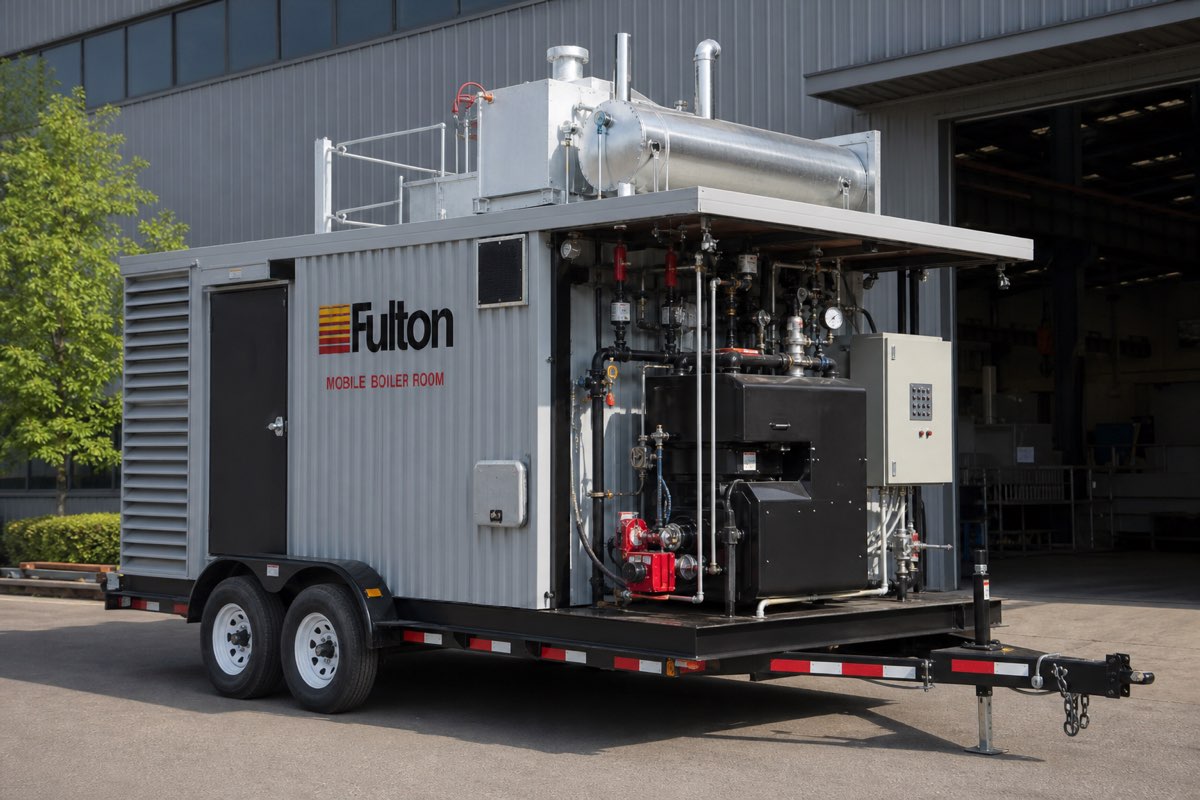
Mobile boiler rooms are the third category: a trailer or container that arrives with the boiler, feedwater system, pumps, controls, and often treatment already integrated, so the install is mostly utility tie-ins rather than field assembly. The right pick depends on your load size, available space, and how much site work you want to avoid. The wider your tolerance on configuration, the faster a provider can match from existing stock.
- Steam firetube, low-pressure under 15 PSIG and high-pressure above it
- Steam watertube for high-pressure process and central plant headers
- Hot water boilers rated in BTU per hour for heat and process loops
- Mobile boiler rooms with feedwater, pumps, and controls integrated
Planned outages versus unplanned failures
Planned outages are the cleaner case. A scheduled retube, a National Board inspection, a burner rebuild, or a boiler replacement takes a permanent unit down for days or weeks, and a rental holds the load so production and building services never stop. Booking that capacity ahead of the outage almost always gets better selection and pricing than a last-minute scramble, and it gives providers time to plan freight, rigging, and permits properly.
Unplanned failures are the other half. A cracked tube sheet, a failed control upgrade, a flooded boiler room, or a unit that simply will not pass inspection turns into lost production and lost heat by the hour. A rental is the bridge until the permanent boiler is repaired or replaced. Because availability, freight, and configuration vary by region, requests route to multiple qualified providers rather than a single yard. Response times vary by location and provider availability.
- Scheduled retubes, inspections, and burner or controls rebuilds
- Boiler replacement projects that need a bridge during construction
- Sudden tube, controls, or boiler-room failures driving lost output
- Seasonal or temporary capacity for peak heating or process demand
What a rental boiler install actually needs
A rental boiler is rarely a standalone drop. Most installs need a feedwater source with treatment, a fuel connection sized to the firing rate, a stack or exhaust path, electrical power for controls and pumps, and a route for blowdown and condensate return. Steam systems add deaerator and chemistry considerations, while hot water systems need supply and return tie-ins at the right temperature and flow. Sharing your utility constraints early keeps these from becoming surprises after the trailer arrives.
Capacity on paper is not capacity at the curb. A unit that fires at full rate still needs gas pressure and electrical service on site to deliver it, and high-pressure steam often triggers state operating-engineer licensing that has to be planned into the scope. Providers who work your region regularly handle permits, rigging, and tie-ins as part of the install. Note your fuel, water, power, and space limits in the request so the quote reflects what you can actually run.
- Feedwater supply with softening or treatment, plus blowdown handling
- Fuel connection and stack or exhaust path sized to the firing rate
- Electrical power for controls, pumps, and burner, plus condensate return
- Operator licensing planning for high-pressure steam where state rules require it
Who rents boilers and why routing beats calling yards
Hospitals rely on steam for sterilization, humidification, and domestic hot water, and cannot lose it. Food and beverage and pharmaceutical plants need clean, reliable steam or hot water for cooking, clean-in-place, and process control. Refineries and chemical plants carry large high-pressure headers, and general manufacturing runs the full range from building heat to process steam. Each sector has its own pressure, purity, and compliance expectations that the right provider already understands.
Calling rental yards one at a time is slow and leaves you guessing about availability, freight, and fit. We route a single request to multiple vetted providers, so you compare real options instead of chasing voicemails. The providers carry the ASME-coded equipment, the NBIC-qualified service, and the insurance; we handle the matching. Because availability is spread across providers and regions, response times vary by location and provider availability, which is exactly why one request reaches several at once.
- Hospitals and healthcare campuses needing reliable sterilization steam
- Food, beverage, and pharma plants needing clean process steam or hot water
- Refineries and chemical plants running high-pressure central headers
- Manufacturing and institutional sites needing heat and process capacity
Common questions
What types of boilers can I rent through your service?
Steam boilers (firetube and watertube, low- and high-pressure), hot water boilers, and complete mobile boiler rooms. Steam units are sized in pounds of steam per hour at your pressure; hot water units in BTU per hour. We route your request to vetted third-party providers who carry the equipment, then you compare options. Describing what you need to make, and at what pressure or temperature, gets the most accurate match.
How do I know what size boiler to rent?
Steam boilers are sized by output in pounds of steam per hour at your operating pressure, and hot water boilers by heat output in BTU per hour at your supply temperature. Share your required flow or load, pressure or temperature, and available fuel up front. Providers quote against the actual duty, not nameplate alone, so the more detail you give, the closer the match and the fewer surprises during install.
What fuels are available for rental boilers?
Natural gas, propane, diesel or number 2 oil, and dual-fuel units are all common across the provider network. The right choice depends on what is available and permitted at your site and how quickly you need to fire. Note any fuel supply, emissions, or air-permit constraints in your request so providers quote a unit you can actually run and connect on site without delay.
How fast can a rental boiler be on site?
It depends on unit size, fuel, freight distance, permitting, and provider availability. Smaller trailer-mounted units near a stocked yard move faster than large watertube packages or full mobile boiler rooms that need rigging and permits. Response times vary by location and provider availability, which is why we route each request to multiple qualified providers rather than promising a single fixed window.
What does the site need before a rental boiler arrives?
Most installs need a feedwater source with treatment, a fuel connection sized to the firing rate, a stack or exhaust path, electrical power for controls and pumps, and a route for blowdown and condensate or hot water return. High-pressure steam may require a licensed operator under state rules. Sharing your utility, space, and permitting constraints early lets providers scope rigging, tie-ins, and permits as part of the install.
Do I work with you or directly with the rental company?
We are a matching service, not an equipment owner. We route your boiler rental request to vetted third-party providers who own the units, hold the ASME-coded equipment and NBIC service capability, and carry the insurance. From there you contract directly with the provider you choose. Our role is connecting you to several qualified options at once so you compare real availability and pricing instead of calling yards one by one.
Get matched with boiler rental providers
Your specs go on file with us, and we run the search for you, free of charge. Because we don't own the equipment, the match is about your needs, not our inventory. Response times vary by location and provider availability.