
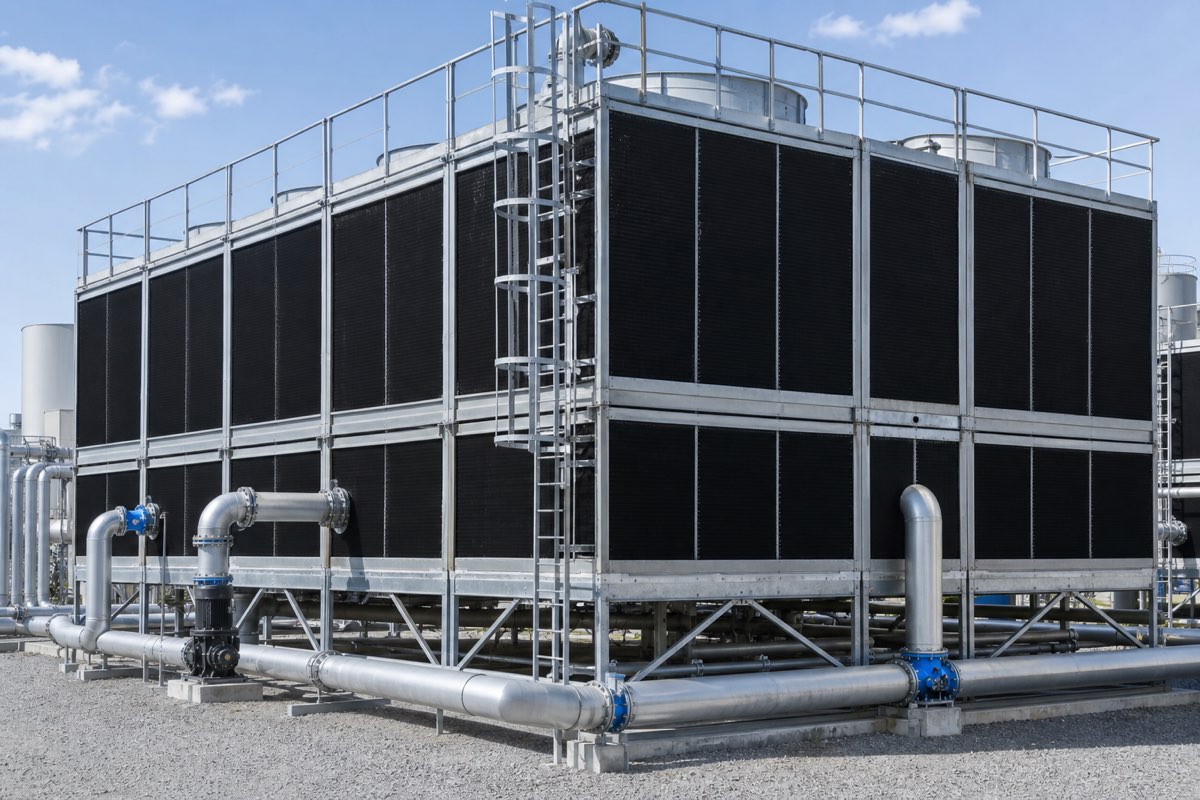
Cooling tower rental
When a cooling tower comes offline for a teardown, a rebuild, or a summer heat event, the heat still has to leave the process. We build your facility profile, then run the search for you, free of charge. We don't own a single tower, so the match is about your heat-rejection load, not our inventory. We route temporary cooling tower rental requests to vetted providers carrying modular and packaged units from roughly 100 to several thousand nominal tons, often paired with rental chillers and pumps, for manufacturing, power generation, data centers, refineries, and institutional plants across the country.
By Industrial Rental Co Editorial Team Reviewed July 2026
- Modular and packaged rental towers, induced and forced draft
- Capacity from roughly 100 to several thousand nominal tons
- Pairs with rental chillers, pumps, and distribution piping
- Equipment from insurance-verified third-party providers
Tower types, sizing, and pairing with chillers
Rental cooling towers usually arrive as modular or packaged units in induced-draft or forced-draft configurations, sized by the heat they reject rather than by footprint alone. Providers quote against nominal tons or cooling capacity at your design wet-bulb temperature, with flow expressed in gallons per minute and the spread between hot and cold water across the tower. Sharing your flow, range, and approach up front is the biggest driver of an accurate match.
Towers rarely work alone. On process loops they often pair with rental chillers, where roughly three tons of tower rejection backs each ton of chiller load to carry both the process heat and the compressor work. On open condenser-water loops they tie straight into the existing distribution. The wider your tolerance on configuration, the faster a provider can mobilize from existing stock.
- Nominal tons, design wet-bulb, and water flow in GPM drive sizing
- Induced-draft and forced-draft modular and packaged units
- Condenser-water duty tied directly into open loops
- Process duty paired with rental chillers and circulation pumps
Common reasons a cooling tower comes in temporarily
Planned work is the cleanest case. A tower teardown and rebuild, a fill and drift-eliminator replacement, a basin repair, or a central-plant overhaul takes permanent capacity offline for weeks, and a rental holds the heat-rejection load so production never stops. Booking that capacity ahead of the season almost always gets better selection and pricing than a same-week scramble.
The other half is heat and growth. A summer heat event pushes wet-bulb past design and the existing towers cannot keep condenser water cold enough, or a new line, a new chiller, or a seasonal peak needs capacity the plant does not yet have. Because availability and freight vary by region, requests route to multiple qualified providers rather than a single yard.
- Tower teardown, rebuild, fill replacement, or basin repair
- Capacity bridging during central-plant upgrades
- Heat events that push wet-bulb past design conditions
- Seasonal peaks and added process load before a permanent install
What a rental cooling tower install actually needs
A rental tower is rarely a standalone drop. Most installs need a makeup water source to replace evaporation, drift, and blowdown, a basin and circulation pumps to move condenser water, water treatment and biocide to control scale and biological growth, electrical power for the fans and pumps, and supply and return distribution piping tied into the loop. A set footprint with crane or rigging access matters as much as the connections.
Sharing your utility constraints early matters. A tower rated for full rejection on paper still needs makeup water volume and electrical capacity at the pad to deliver it. Providers who work your region regularly handle permits, rigging, treatment scope, and tie-ins as part of the install rather than as surprises after the unit arrives.
- Makeup water for evaporation, drift, and blowdown losses
- Basin, circulation pumps, and supply and return piping
- Water treatment and biocide to manage scale and biological control
- Electrical capacity for fans and pumps, plus rigging access
Sectors served and how the matching works
Temporary cooling towers show up across heat-intensive industries: manufacturing and plastics, power generation, data centers, refineries and chemical plants, and institutional plants on campuses and in hospitals. Each carries different water-quality, redundancy, and uptime constraints, and the right unit reflects that. A data center bridging condenser-water capacity and a refinery covering a tower outage want very different scopes.
We do not own towers, chillers, or trucks, and we do not dispatch crews. We take your flow, range, wet-bulb, water source, and timeline and route the request to vetted providers whose equipment and certifications fit the job. Because no single provider can promise timing, your request reaches several at once, and quotes come back from the yards best positioned to serve your site.
- Manufacturing, plastics, and general process cooling
- Power generation, refineries, and chemical plants
- Data centers and mission-critical condenser-water loops
- Institutional and campus central plants
Keep planning
Common questions
How is a rental cooling tower sized?
By the heat it has to reject, not footprint alone. Providers quote against nominal tons or capacity at your design wet-bulb temperature, plus water flow in gallons per minute and the range between hot and cold water across the tower. One ton of cooling is about 15,000 BTU per hour at the condenser. Sharing your flow, range, approach, and wet-bulb up front gets the most accurate match.
How does tower tonnage relate to chiller load?
A cooling tower has to reject both the process heat the chiller removes and the work the compressor adds, so it carries more load than the chiller itself. A common planning ratio is roughly three tons of tower rejection for every ton of chiller capacity, expressed as about three gallons per minute of condenser water per ton. Confirm the exact figure against your chiller data so providers quote a tower that actually keeps condenser water in range.
Are rental cooling towers paired with chillers?
Often, on closed process loops. A rental chiller cools the process water while a rental tower rejects the condenser-water heat outdoors, and the two are sized together. On open condenser-water systems the tower can tie straight into existing distribution without a rental chiller. Tell providers whether you need process cooling, condenser-water duty, or both so they scope the right combination of equipment.
What does a rental cooling tower install need on site?
Typically a makeup water source to replace evaporation, drift, and blowdown, a basin and circulation pumps, water treatment and biocide to control scale and biological growth, electrical power for fans and pumps, and supply and return piping tied into the loop. A clear footprint with rigging access also matters. Sharing your water source and utility limits early lets providers scope treatment and tie-ins correctly.
How fast can a rental cooling tower be on site?
It depends on unit size, freight distance, rigging, water and electrical readiness, and provider availability. Smaller modular units near a stocked yard mobilize faster than large packaged towers needing cranes and permits. Response times vary by location and provider availability, so requests are routed to multiple qualified providers rather than promised against a fixed window.
Which industries rent temporary cooling towers?
Manufacturing and plastics, power generation, data centers, refineries and chemical plants, and institutional plants on campuses and in hospitals are the common users. They rent to bridge a tower teardown or rebuild, to cover a summer heat event when wet-bulb passes design, or to add capacity for a new line or chiller. Each sector carries different water-quality and uptime constraints that shape the right unit.
Cooling tower rentals
Where we route cooling tower rentals
Get matched with cooling tower providers
Your specs go on file with us, and we run the search for you, free of charge. Because we don't own the equipment, the match is about your needs, not our inventory. Response times vary by location and provider availability.