
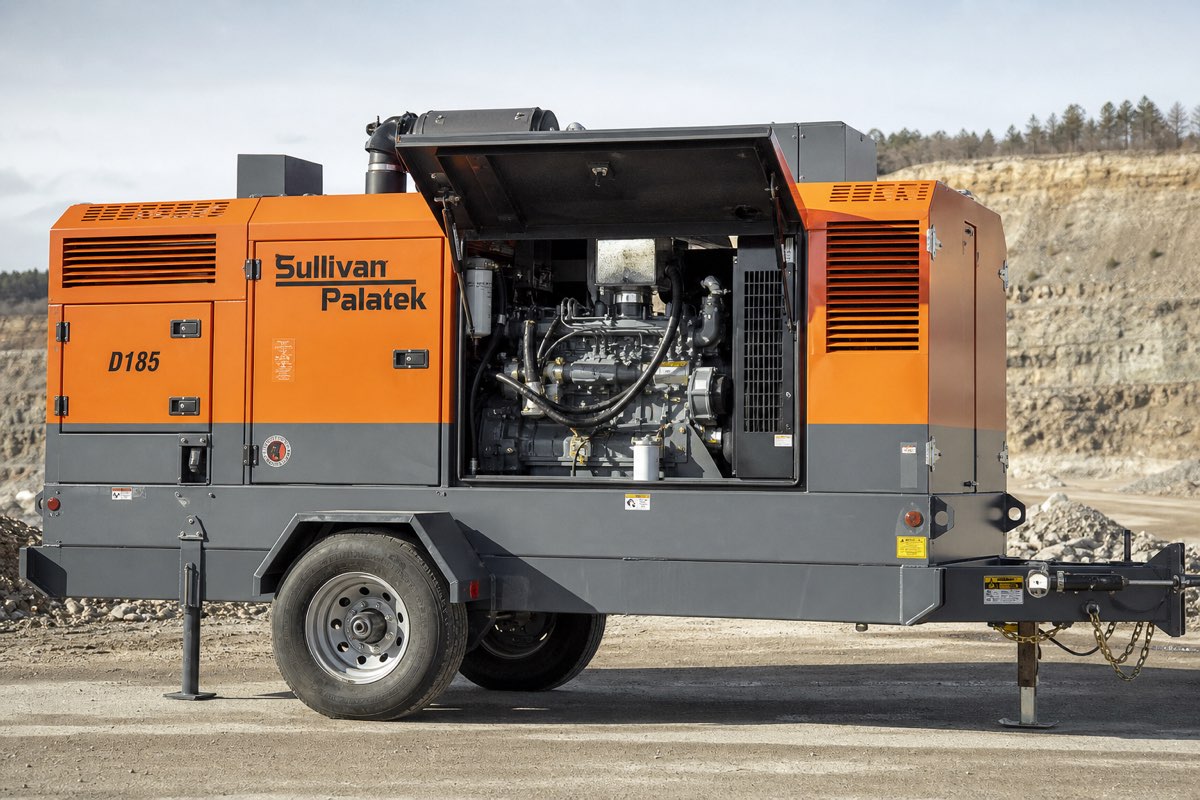
Industrial air compressor rental
When a plant air system goes down or a project needs temporary compressed air, the work still has to run. We build your facility profile, then run the search for you, free of charge. We don't own a single compressor, so the match is about your air demand, not our inventory. We route air compressor rental requests to vetted providers carrying electric and diesel units from small portable packages up to 1,600+ CFM, in oil-free and lubricated configurations at common pressures around 100 to 150 PSIG, for manufacturing, refineries, food and beverage, pharma, construction, and utilities.
By Industrial Rental Co Editorial Team Reviewed July 2026
- Oil-free and lubricated (oil-flooded) rotary screw units
- Electric plant compressors and diesel portable packages
- Sized by CFM at your target PSIG, with aftercoolers and dryers
- Compressors and air treatment from insurance-verified providers
Oil-free vs lubricated, and sizing by CFM and PSI
Air compressor rentals are matched on two numbers first: airflow in cubic feet per minute (CFM) and pressure in pounds per square inch gauge (PSIG). A unit that delivers 750 CFM at 100 PSIG behaves very differently from one held to 125 or 150 PSIG, because raising pressure costs flow. Telling providers your required CFM at your target PSIG, plus your duty cycle, is the single biggest driver of an accurate quote.
The other early decision is air quality. Lubricated, or oil-flooded, rotary screw compressors are the workhorse for general plant air, pneumatic tools, and most process duty, and they pair with downstream filtration when cleaner air is needed. Oil-free units serve applications where even trace oil carryover is unacceptable, such as food contact, pharma, electronics, and instrument air. Flagging your air-quality class up front routes the request to the right kind of unit.
- Lubricated rotary screw for general plant air and pneumatic tools
- Oil-free for food, pharma, electronics, and instrument air
- Common working pressures around 100, 125, and 150 PSIG
- Right-size CFM for peak demand plus a realistic duty-cycle margin
Planned outages and unplanned air-system failures
Planned work is the cleanest case. A compressor overhaul, an air-end rebuild, a controls upgrade, or a scheduled plant turnaround takes a permanent unit offline for days or weeks, and a rental holds the air load so production and instrument systems never lose pressure. Booking that capacity ahead almost always gets better selection and pricing than a same-week scramble.
Unplanned failures are the other half. A seized air end, a failed dryer, or a contamination event can stop tools, valves, and process control by the hour. Temporary demand also drives rentals: shutdown and turnaround crews, sandblasting and pipeline work, and seasonal capacity needs. Because availability and freight vary by region, requests route to multiple qualified providers rather than a single yard.
- Compressor overhauls, air-end rebuilds, and controls upgrades
- Plant turnarounds and scheduled maintenance windows
- Emergency backup when a permanent unit or dryer fails
- Project and seasonal demand: blasting, pipeline, and peak loads
What a rental air install actually needs
A rental compressor is rarely just a box on the pad. Electric units need a power feed and disconnect sized to the motor, while diesel portable packages need fuel and refueling access but no grid power. Most installs also need an aftercooler to drop discharge temperature, a dryer to control moisture, filtration to match the required air class, an air receiver to buffer demand swings, and distribution piping or hose to tie into your header.
Sharing your utility and tie-in constraints early matters. A unit rated for full output on paper still needs the electrical capacity or fuel supply to deliver it, plus a place for the receiver and a clean tie-in point. Providers who work your region regularly scope aftercoolers, dryers, filters, receivers, and rigging as part of the install rather than as surprises after the trailer arrives.
- Power and disconnect for electric units, or fuel for diesel packages
- Aftercooler and dryer to manage heat and moisture
- Filtration matched to your air-quality class
- Air receiver plus distribution piping or hose to your header
Sectors served and the marketplace advantage
Compressed air is a utility across heavy industry, so rental demand spans many sectors. Manufacturing and metal fabrication run pneumatic tools and process air, refineries and chemical plants need instrument air and process or nitrogen and PSA feed gas, food and beverage and pharma demand oil-free quality, and construction, utilities, and shutdown crews need portable diesel air on site. Each sector has its own pressure, flow, and air-quality expectations.
Because no single provider stocks every size, fuel, and air class in every region, a marketplace model fits compressed air well. We route your request to multiple vetted providers, who quote against your CFM, PSIG, air quality, and site constraints. Response times vary by location and provider availability, which is exactly why requests go to several providers at once rather than depending on one yard.
- Manufacturing and metal fabrication: plant air and pneumatic tools
- Refineries and chemical: instrument air and nitrogen or PSA feed
- Food and beverage and pharma: oil-free, filtered air
- Construction, utilities, and turnarounds: portable diesel air
Keep planning
- Oil-free air compressor rentalFor food, pharma, electronics, and instrument air where trace oil is unacceptable.
- Diesel air compressor rentalPortable diesel-driven packages for construction, remote sites, and high-flow temporary air.
- Air compressor rental cost guideHow CFM, pressure, fuel, dryers, and rental term shape what a temporary compressor costs.
Common questions
How is a rental air compressor sized?
By airflow and pressure: the cubic feet per minute (CFM) you need at your target pressure in PSIG, plus your duty cycle. Raising pressure reduces available flow, so a unit quoted at 100 PSIG delivers more CFM than the same unit at 150 PSIG. Size for peak demand with a realistic margin so the compressor is not running flat out continuously. Sharing required CFM, target PSIG, and air quality up front gets the most accurate match.
What is the difference between oil-free and lubricated rental compressors?
Lubricated, or oil-flooded, rotary screw compressors inject oil for sealing and cooling and are the workhorse for general plant air and pneumatic tools, paired with downstream filtration when cleaner air is needed. Oil-free compressors produce air with no oil introduced in the compression chamber, for applications where trace oil is unacceptable, such as food contact, pharma, electronics, and instrument air. Specify your required air-quality class so providers route the right type of unit.
Should I rent an electric or a diesel air compressor?
It depends on power and mobility. Electric units suit fixed plant locations with adequate electrical capacity and are common for indoor or stationary duty. Diesel portable packages need no grid power and are common for construction, remote sites, and high-flow temporary work, but require fuel and refueling access. Note your available power, site location, and any emissions or noise constraints in the request so providers quote a unit you can actually run.
Do rental compressors include air dryers and filtration?
Usually yes, scoped as part of the package. Most temporary installs include an aftercooler to drop discharge temperature and a dryer to control moisture, plus filtration matched to your required air class and often an air receiver to buffer demand. Moisture and contamination protect both your tools and your process, so specify your air-quality needs and ambient conditions so providers size the treatment correctly.
What pressures and flows can a rental air compressor reach?
Common plant air runs around 100 to 150 PSIG, and rental fleets span from small electric units of a few dozen CFM up to large diesel packages of 1,600 CFM or more. Higher-pressure and specialty units exist for specific applications. Because flow and pressure trade off, the right unit depends on your exact CFM at your target PSIG. Share both figures and your duty cycle so providers can match capacity accurately.
How fast can a rental air compressor be on site?
It depends on unit size, fuel or power needs, freight distance, and provider availability. Small portable diesel units near a stocked yard mobilize quickly, while large electric plant compressors, dryers, rigging, and tie-ins take longer. Response times vary by location and provider availability, so requests are routed to multiple qualified providers rather than promised against a fixed window.
Air compressor rentals
Where we route air compressor rentals
Get matched with air compressor providers
Your specs go on file with us, and we run the search for you, free of charge. Because we don't own the equipment, the match is about your needs, not our inventory. Response times vary by location and provider availability.