
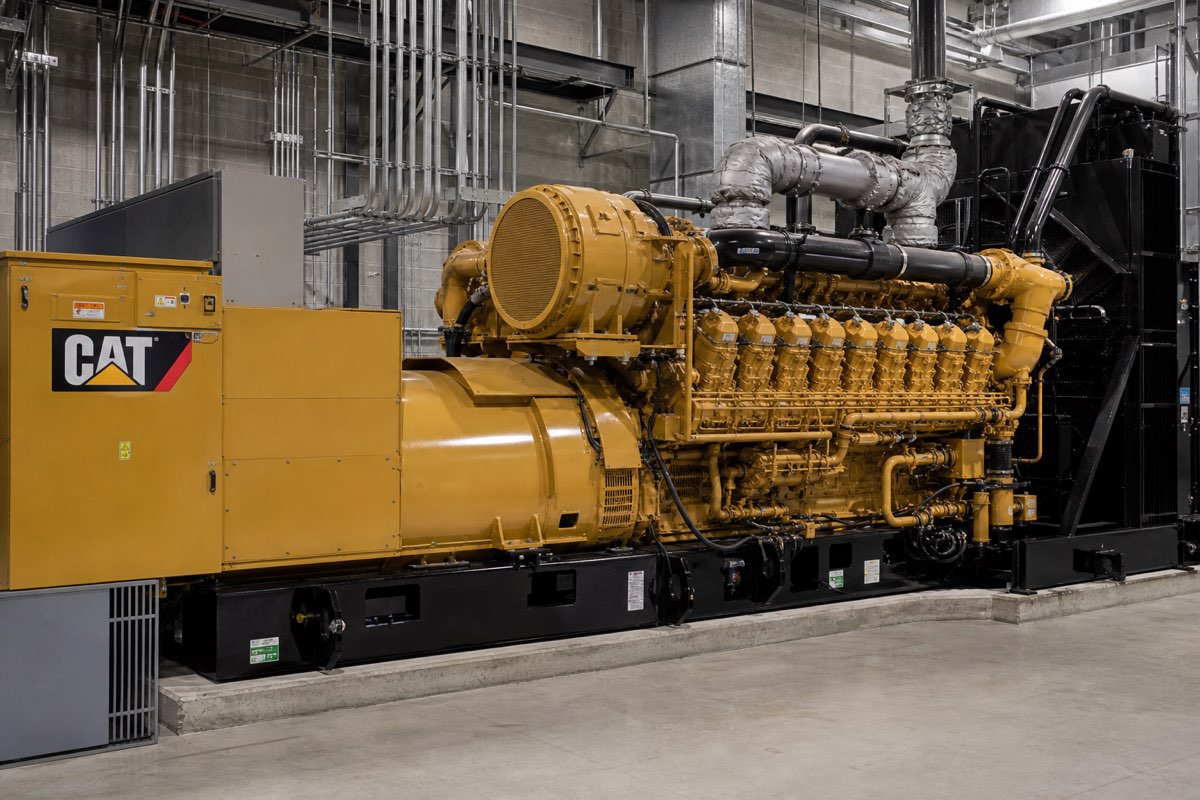
Industrial generator rental
When grid power drops or a planned shutdown pulls a feed offline, critical loads still need to run. We build your facility profile, then run the search for you, free of charge. We don't own a single generator, so the match is about your critical load, not our inventory. We route industrial generator rental requests to vetted providers carrying mobile and skid-mounted units from roughly 20 kW to multi-megawatt, scalable higher through paralleling, in diesel and natural-gas configurations for data centers, hospitals, utilities, manufacturing, refineries, and events. Response times vary by location and provider availability, so requests go to multiple qualified providers at once.
By Industrial Rental Co Editorial Team Reviewed July 2026
- Diesel and natural-gas units, roughly 20 kW to multi-megawatt
- Prime and standby duty, single sets or paralleled for redundancy
- Load banks, cable, distribution, and transfer switches available
- NFPA 110 and Tier-rated equipment from insurance-verified providers
Sizing a rental generator and choosing fuel and duty
Rental generators are quoted in kilowatts and kVA against your real electrical load, not nameplate alone, because motor starting, power factor, and harmonic loads shift the number a unit must actually carry. A single set commonly covers roughly 20 kW up to a couple of megawatts, and larger demand is met by paralleling multiple units. Telling providers your kW and kVA, voltage, phase, and the loads in play is the biggest driver of an accurate quote.
Fuel and duty class shape the match next. Diesel sets start fast and run hard, while natural-gas units suit lower emissions and long continuous runtime where a gas connection exists. Prime-rated machines carry variable load indefinitely, whereas standby ratings cover outage backup at lighter duty cycles. The wider your tolerance on configuration, the faster a provider can scope a unit from existing stock.
- Output in kW and kVA at your voltage, phase, and frequency
- Diesel for fast start and high duty, natural gas for low-emission runtime
- Prime rating for continuous load, standby rating for outage backup
- Single set under a couple of megawatts, paralleled banks above that
Planned shutdowns and unplanned outage bridging
Planned work is the cleanest case. A switchgear upgrade, a utility tie-in, a generator overhaul, or a scheduled maintenance window pulls permanent power offline, and a rental holds the load so operations never stop. Booking that capacity weeks ahead almost always means better selection and pricing than a same-week scramble, especially for large paralleled jobs that need rigging and permits.
Unplanned outages are the other half. A failed transformer, a storm, or a tripped main turns into lost production or risk to patients and equipment by the hour, and a rental is the bridge until permanent power returns. Because freight, fuel, and availability vary by region, requests route to multiple qualified providers rather than a single yard, and response times vary by location and provider availability.
What a rental generator install actually needs
A rental set is rarely a standalone drop. Most installs need fuel and an on-site tank with delivery, often with fuel polishing for long runs, plus cable and distribution sized to the load, a tie-in through a transfer switch or paralleling switchgear, and a path to connect cleanly to your gear. Sharing your utility and connection details early lets providers scope cable runs, breakers, and tap points before the unit arrives.
Larger or critical jobs add load banks for commissioning and to keep lightly loaded diesels from wet stacking, neutral and grounding details, and sometimes sound attenuation for occupied sites. Providers who work your region regularly handle permits, rigging, and tie-ins as part of the scope rather than as surprises after the trailer is on the pad.
- Fuel tanks, delivery, and fuel polishing for extended runtime
- Cable, distribution panels, and breakers sized to the load
- Transfer switches for backup, paralleling switchgear for redundancy
- Load banks for commissioning and to prevent diesel wet stacking
Who rents generators and why routing helps
Generator rentals span sectors with very different priorities. Data centers and hospitals need redundant, code-compliant standby power and often run paralleled banks behind automatic transfer. Utilities, manufacturing, and refineries lean on prime power for shutdowns and load growth, while events and construction need temporary distributed power on tight timelines. Each case narrows the right unit size, fuel, and supporting gear.
No single provider stocks every size, fuel, and emissions tier, and code obligations such as NFPA 110 for life-safety power and Tier emissions ratings sit with the third-party providers who own and certify the equipment. Routing one request to several vetted providers widens the pool you draw from, surfaces units that actually fit, and lets each provider quote against equipment they can verify and stand behind.
- Data centers and hospitals: redundant, NFPA 110 standby power
- Utilities, manufacturing, refineries: prime power for shutdowns and load growth
- Events and construction: temporary distributed power on short timelines
- Code and emissions compliance owned by the certifying providers
Common questions
How is a rental generator sized?
By your real electrical load in kilowatts and kVA at your voltage, phase, and frequency, not by nameplate alone. Motor starting, power factor, and nonlinear loads all change the size a unit must carry, so a load that reads modest on paper can need a larger set. A single machine commonly covers roughly 20 kW to a couple of megawatts, with paralleling above that. Sharing your loads, voltage, and run profile up front gets the most accurate match.
Should I rent a diesel or natural-gas generator?
It depends on start time, runtime, emissions limits, and fuel access. Diesel sets start fast and carry high duty, which suits outage backup and heavy prime loads, but they need fuel delivery and tankage. Natural-gas units run cleaner and suit long continuous operation where a gas connection exists, though they typically start slower. Note your emissions constraints and available fuel in the request so providers quote a unit you can actually run on site.
What is the difference between prime and standby rating?
Prime rating means a generator can carry a variable load continuously, which fits planned shutdowns, load growth, and construction power. Standby rating covers backup during an outage at lighter average duty and a limited number of hours per year, which fits life-safety and emergency use. The same physical frame is often rated differently, so tell providers whether the unit will run continuously or only during outages.
Can rental generators be paralleled for more capacity or redundancy?
Yes. When one set will not carry the load, providers parallel multiple units through paralleling switchgear to reach higher capacity, and the same approach adds N+1 redundancy for critical sites like data centers and hospitals. Paralleling needs compatible controls, synchronizing gear, and careful load planning. Share your total kW, redundancy target, and tie-in details so providers can scope the right number and size of units.
What supporting equipment comes with a generator rental?
Beyond the set itself, most installs involve fuel tanks and delivery, cable and distribution sized to the load, and a transfer switch or paralleling switchgear for the tie-in. Load banks are common for commissioning and to keep lightly loaded diesels from wet stacking. Fuel polishing supports long runs, and sound attenuation matters for occupied sites. Specify your connection and runtime needs so providers scope the full package rather than the unit alone.
Are rental generators code-compliant for hospitals and data centers?
Code-critical applications such as life-safety power fall under standards like NFPA 110, and emissions are governed by EPA Tier ratings. Those obligations sit with the third-party providers who own, maintain, and certify the equipment, not with this matching service. Reputable providers supply units and documentation suited to your code requirements. State your standards and emissions limits in the request so providers quote equipment they can verify meets them.
Industrial generator rentals
Where we route industrial generator rentals
Get matched with generator rental providers
Your specs go on file with us, and we run the search for you, free of charge. Because we don't own the equipment, the match is about your needs, not our inventory. Response times vary by location and provider availability.