
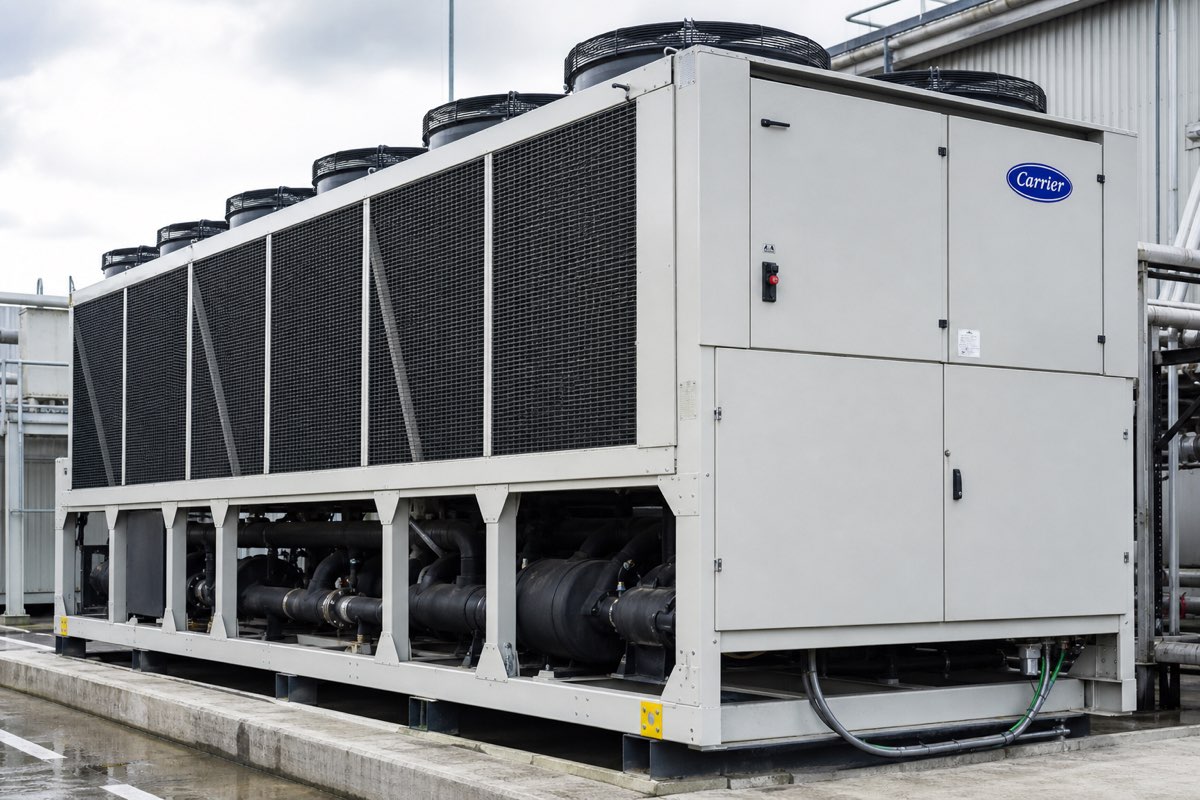
Chiller rental cost
Industrial chiller rental commonly runs roughly $2,500 to $7,000 a month for small air-cooled units, and $12,000 to $30,000 or more for larger tonnages, before power hookup and ancillaries. The sections explain what moves the number. We do not set prices, we route your request to vetted providers who each quote independently against your job.
By Industrial Rental Co Editorial Team Reviewed July 2026
- Monthly rental ranges by tonnage and chiller type
- Cost drivers explained: tonnage, air vs water-cooled, power, term
- Power hookup, transformers, and switchgear are billed separately
- Independent quotes from insurance-verified providers
What chiller rental costs
| Chiller type and size | Typical monthly rental range |
|---|---|
| Air-cooled, 20 to 100 tons | $2,500 to $7,000 |
| Air-cooled, 100 to 300 tons | $6,000 to $16,000 |
| Air-cooled, 300 to 500 tons | $12,000 to $30,000 |
| Water-cooled, 500 to 1,000 tons | $18,000 to $45,000 |
| Large or process, 1,000 to 2,000+ tons | $35,000 to $90,000+ |
Ranges are estimates for planning only, not quotes. Each provider prices independently based on the specific equipment, location, rental duration, power hookup, and ancillary needs such as pumps, cooling towers, and temporary piping. Use these figures to budget, then submit a request to get firm numbers for your job. Rates last reviewed June 2026; figures are typical ranges from third-party providers, not quotes, and vary by region, duration, and availability.
How tonnage and chiller type drive the price
Capacity is the first thing that moves a chiller rental rate, and on a chiller it is measured in tons of cooling, where one ton is 12,000 BTU an hour of heat removal. A small air-cooled unit in the 20 to 100 ton band rents for far less than a 300 to 500 ton machine, and a large water-cooled or process plant above 1,000 tons sits higher again, because bigger chillers cost more to own, transport, and service. The table above reflects those steps.
Type matters alongside size. Air-cooled units reject heat to the air and arrive more or less self-contained, which keeps the setup simpler. Water-cooled units are more efficient at larger tonnages but need a cooling tower and condenser water loop, so the rental often comes as a package and the line items grow. Telling providers your load in tons, your target temperatures, and whether the site favors air or water-cooled lets them land in the right row rather than quoting blind.
- Tonnage is the primary rate driver
- Air-cooled is simpler to set up; water-cooled scales better at size
- Water-cooled rentals often include a tower and condenser water loop
- Sizing to the real load avoids paying for idle capacity
Power hookup and the equipment around the chiller
The headline rental rate covers the chiller, not the infrastructure that runs it. Large rental chillers draw significant power, so transformers, cable, and switchgear are common separate line items, and a site without spare electrical capacity may also need a rental generator, which changes the picture entirely. Sharing your available power and voltage up front lets providers tell you quickly whether the site can support the unit or whether temporary power belongs in the quote.
Beyond power, the ancillaries depend on the chiller type and the loop. Rental pumps, temporary piping and hoses, manifolds, and on water-cooled jobs a cooling tower all add to the package. A bare chiller and a fully outfitted temporary cooling system are not the same quote even at the same tonnage. Listing the connections, distances, and whether your existing pumps can serve the temporary loop gets you a number that reflects the full system instead of a surprise at delivery.
- Power hookup, transformers, and switchgear are common separate items
- Sites short on power may need a rental generator too
- Pumps, temporary piping, and manifolds add to the package
- Water-cooled jobs add a cooling tower and condenser water loop
Process-grade units, rental length, and timing
Not all cooling is equal. A comfort or general-process load is one thing, but a unit that has to hold a tight temperature for injection molding, a reactor, or pharmaceutical work carries a premium, because process-grade chillers and the controls that keep them in band cost more to build and maintain. If your application needs tight tolerance or documented temperature control, say so, since it materially affects which unit is matched and what it costs.
Rental duration and timing shape the price as much as the equipment. Longer commitments usually carry better effective monthly rates because mobilization is spread across more time on rent, while peak summer demand tightens chiller availability across the market and firms up pricing. A two-week emergency rental and a six-month plant-overhaul rental of the same unit can land at very different monthly equivalents. Booking planned capacity before peak season generally earns better selection and rates.
- Process-grade and tight-temperature units carry premium pricing
- Longer terms generally improve the effective monthly rate
- Peak summer demand tightens availability and firms up pricing
- Booking planned capacity early earns better selection
Common questions
How much does it cost to rent an industrial chiller per month?
It depends heavily on tonnage and type. A small air-cooled unit in the 20 to 100 ton range often runs roughly $2,500 to $7,000 a month, a 300 to 500 ton air-cooled unit lands around $12,000 to $30,000, and large water-cooled or process plants above 1,000 tons can reach $90,000 or more. Those figures are the rental base only. Power hookup, pumps, and any cooling tower are separate, and every provider prices independently against your specific job.
Is air-cooled or water-cooled cheaper to rent?
At smaller tonnages an air-cooled chiller is usually simpler and cheaper to set up because it rejects heat to the air and arrives largely self-contained. Water-cooled units are more efficient at larger tonnages but need a cooling tower and condenser water loop, so the rental often comes as a package with more line items. The right answer depends on your load size and site, so the estimates here are a starting point rather than a verdict.
What gets billed besides the chiller itself?
Expect separate line items for power hookup, which can include transformers, cable, and switchgear, plus rental pumps, temporary piping and hoses, and on water-cooled jobs a cooling tower. Sites short on electrical capacity may also need a rental generator. Delivery and mobilization are their own costs as well. Asking each provider to itemize these makes quotes directly comparable rather than just comparing the headline monthly rate.
Why do process-grade chiller rentals cost more?
A unit that has to hold a tight temperature for injection molding, reactor cooling, or pharmaceutical work uses a different class of chiller and tighter controls, both of which cost more to build and maintain. That premium shows up in the rental rate. If your application needs precise or documented temperature control, specify it at the request stage so the right unit is matched rather than a general-purpose machine that cannot hold the band.
Does season affect chiller rental pricing?
Yes. Chiller demand peaks in summer, which tightens availability across the market and firms up pricing exactly when many facilities need supplemental cooling. Booking planned capacity before peak season generally earns better selection and rates than shopping during a heat wave. For emergencies the market still responds, but timing and location weigh more heavily on both availability and price.
Are these chiller rental cost estimates guaranteed prices?
No. The figures on this page are planning estimates only, meant to help you budget, not firm quotes. Each provider prices independently based on the specific equipment, your location, the rental duration, power hookup, and ancillary needs such as pumps and cooling towers. To get real numbers, submit a request and we route it to vetted providers who quote against your actual job. Response times vary by location and provider availability.
Get matched with chiller rental providers
Your specs go on file with us, and we run the search for you, free of charge. Because we don't own the equipment, the match is about your needs, not our inventory. Response times vary by location and provider availability.